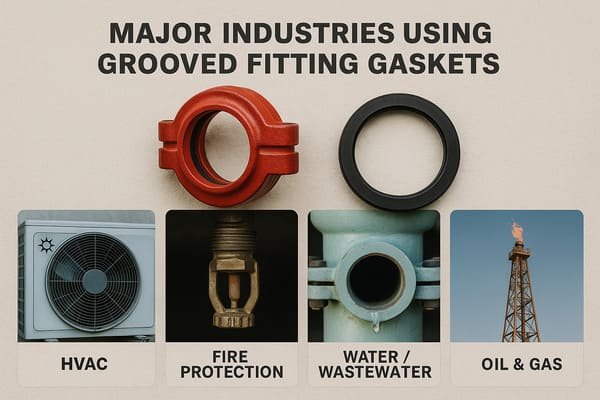
In modern construction and infrastructure development, the demand for efficient, reliable, and scalable piping solutions has led to the widespread adoption of Grooved pipes across various industries. Among the most critical applications of these systems are fire protection and HVAC (heating, ventilation, and air conditioning) networks, where performance, durability, and safety are paramount. Grooved piping systems have transformed how these networks are designed and installed by offering a mechanical joining method that eliminates the need for welding or threading. This not only accelerates installation but also enhances system flexibility and long-term reliability. As buildings become more complex and safety standards more stringent, grooved pipes are increasingly being recognized as an essential component in ensuring seamless operation in both fire protection and HVAC systems.
In fire protection systems, Grooved pipes play a crucial role in ensuring that water is delivered quickly and efficiently during emergencies. These systems include fire sprinkler networks, hydrant lines, and standpipe installations, all of which rely on consistent pressure and leak-proof connections to function effectively. Grooved piping systems are particularly well-suited for these applications because of their secure gasket-based sealing, which minimizes the risk of leaks even under high-pressure conditions. In sprinkler systems, for example, grooved pipes allow for rapid installation and easy modifications, making them ideal for large commercial buildings where system layouts may need to be adjusted during construction. Their ability to maintain integrity under pressure ensures that water is distributed evenly across all sprinkler heads, providing effective fire suppression. Additionally, grooved systems are commonly used in pump rooms and main distribution lines, where their reliability and ease of maintenance are critical. High-quality grooved piping solutions, such as those available at https://wingrou.com/products
, demonstrate how modern engineering supports the demanding requirements of fire protection systems.
The use of Grooved pipes in HVAC systems is equally significant, particularly in chilled water and cooling networks that require efficient temperature control and consistent fluid flow. HVAC systems often involve complex piping layouts that must accommodate thermal expansion, vibration from mechanical equipment, and varying pressure levels. Grooved piping systems address these challenges by providing flexible joints that can absorb movement and reduce stress on the system. This flexibility is especially important in chilled water systems, where temperature fluctuations can cause pipes to expand and contract. By allowing controlled movement within the joints, grooved pipes help prevent damage and maintain system integrity over time. Furthermore, their leak-proof design ensures that there is no loss of fluid, which is essential for maintaining energy efficiency and system performance. The ease of installation and maintenance also makes grooved pipes a preferred choice for HVAC contractors, as it reduces downtime and simplifies system upgrades or repairs.
One of the key advantages of Grooved pipes in both fire protection and HVAC applications is their ability to handle high pressure while preventing leaks. These systems are designed to withstand demanding operating conditions, making them suitable for use in high-rise buildings, industrial facilities, and large commercial complexes. The gasket-based sealing mechanism ensures a tight connection, while the robust construction of couplings and fittings provides the strength needed to handle pressure fluctuations. In addition to pressure handling, grooved pipes offer excellent vibration absorption, which is particularly important in environments with heavy machinery or mechanical equipment. By reducing the impact of vibrations, these systems help extend the lifespan of the piping network and minimize the risk of failures. This combination of strength, flexibility, and reliability makes grooved pipes an ideal solution for applications where performance cannot be compromised.
Real-world applications further highlight the effectiveness of Grooved pipes in modern infrastructure. In commercial buildings such as shopping malls and office complexes, grooved piping systems are widely used for both fire protection and HVAC networks, ensuring efficient operation and easy maintenance. Hospitals, where safety and reliability are critical, benefit from the flexibility and leak-proof performance of grooved systems, which help maintain uninterrupted operation of essential services. In large-scale developments such as airports and industrial facilities, grooved pipes enable rapid installation and scalability, allowing systems to be expanded or modified as needed. These case-based examples demonstrate how grooved piping systems meet the diverse requirements of different industries while maintaining high standards of performance and safety. Their ability to adapt to various applications makes them a versatile and reliable choice for modern construction projects.
In conclusion, the applications of Grooved pipes in fire protection and HVAC systems underscore their importance in today’s construction and industrial sectors. Their innovative design, which combines mechanical coupling with gasket-based sealing, offers significant advantages in terms of installation speed, flexibility, and reliability. In fire protection systems, they ensure efficient water delivery and leak-proof performance, while in HVAC networks, they provide the flexibility and durability needed to handle temperature variations and mechanical stress. The ability of grooved pipes to handle high pressure, absorb vibrations, and facilitate easy maintenance further enhances their value across different applications. As infrastructure projects continue to grow in complexity and scale, the adoption of grooved piping systems is expected to increase, solidifying their role as a key component in modern engineering solutions.